Lake with Cabin & Trees, an oil painting by Bob Ross for two of his friends, sold for $47,500 at Alex Cooper Auctioneers.
The Joy of Painting ended in 1994, but host Bob Ross is still a star. The show found immense success online and in reruns; fans buy painting supplies and merchandise from Bob Ross Inc., and his paintings reach high prices at auctions. Alex Cooper Auctioneers recently offered a painting by Ross at its Gallery Auction on October 31, which was estimated at $20,000 to $30,000. In what’s been called, to paraphrase Ross himself, a “happy little surprise,” the painting sold for $47,500, more than doubling its low estimate.
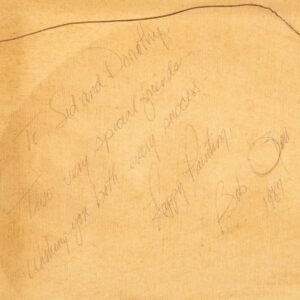
The framed oil painting, listed as “Lake with Cabin & Trees,” is a peaceful nature scene like the ones Ross taught his viewers to paint. However, there are a few apparent differences. This one features an unusual composition, with the scene occupying an oval on the canvas, framed on one side with grass and, of course, a tree extending beyond the shape’s border. But to see what makes it truly unique, you must turn it around. The back bears an inscription from Ross himself, reading “To Sid and Dorothy, two very special friends – wishing you both every success – Happy Painting, Bob Ross, 1987.”

The reverse of the painting, with Ross’s inscription on the left.
The painting was a gift from Ross to personal friends, and the inscription conveys the same kindness and love of painting that shines through in his show. The recipients, Sidney and Dorothy Knudsen, passed it along to their daughter Arlene Alascio, who then willed it to the seller, her brother-in-law.

A closer look at the inscription.
Considering the high prices Bob Ross’ paintings have reached at recent auctions, including a record $114,800 at Bonhams earlier this year, maybe the final price for “Lake with Cabin & Trees” isn’t surprising. Whether the paintings are seen as pop-culture kitsch, souvenirs of a simpler time, or true works of art, one thing is sure: they have serious value.
Photos courtesy of Alex Cooper Auctioneers.
You may also like:
Bob Ross Alaskan Oil Paintings, ca. 1970, Cruise to Cool $15,000 – $20,000 Appraisals
Bob Ross Painting is Upside of Couple’s Downsizing

Photo: Kovels Antique Trader
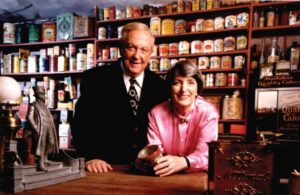
It’s hard to imagine the world of antiques without Terry Kovel. For nearly seven decades, her name has been synonymous with expertise, enthusiasm, and the kind of curiosity that turns ordinary discoveries into extraordinary stories. Today, as she celebrates her 97th birthday, we honor her longevity and the legacy she’s built, which continues to guide and inspire collectors of all ages.
Terry and her late husband, Ralph Kovel, changed how America connected with its past. Together, they brought antiques out of dusty attics and into everyday life through their books, newspaper columns, television programs, and price guides that have become the standard reference for collectors worldwide. Their partnership transformed a shared passion into a lifelong mission to educate, preserve, and celebrate craftsmanship.
Terry’s career has always been rooted in discovery, from unearthing the story of George E. Ohr, the “Mad Potter of Biloxi,” long before his genius was widely recognized, to chronicling the art and advertising that filled her home’s basement “country store” set, featured in Flea Market Finds with the Kovels. She was never content to look backward; she was as likely to be found at Design Miami or Art Basel as she was poring over an auction catalog. As she once showed in her “On the Road” column from Miami Beach, loving antiques doesn’t mean being stuck in the past—it means understanding how the past continually shapes the present.
Even in moments of personal loss, such as Ralph’s passing in 2008, Terry’s connection to readers remained heartfelt and unwavering. Her note of thanks reminded us that collecting isn’t just about things. It’s about people, memories, and the shared joy of finding meaning in the objects we keep.
Now, at 97, her wisdom sparkles brighter than ever. In her own words:
“The older I get, the more I appreciate not just the treasures I’ve found, but the effort — and the luck — that helped me find them.”
Happy Birthday, Terry Kovel! Thank you for reminding us that collecting is not merely a hobby, but a lifelong adventure of curiosity, kindness, and discovery.

Lindsay Evans and her grandmother Leila Cohoon at Leila’s Hair Museum, holding hair flowers they made. Photo: Lindsay Evans via AP.
Leila’s Hair Museum in Independence, Mo., grew out of the collection of hairdresser Leila Cohoon. She had more than 3,000 pieces on display, from Victorian mourning jewelry to strands of celebrities’ and historical figures’ hair to modern art. Since her passing in November 2024, the museum has closed, but her legacy lives on as museums across the country acquire pieces from her collection.
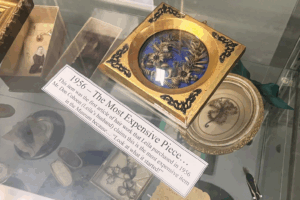
Cohoon began collecting hair art as a young woman in 1956. She was shopping for Easter shoes, but, in an experience that many collectors know too well, decided to buy something interesting she spotted at an antique store instead. It was a Victorian wreath made of tiny flowers woven from human hair, housed in a gold frame.
That one delicate wreath sparked Cohoon’s curiosity. She sought out more hair art at antique stores, giving dealers her business card so they could contact her when they had any. In the 1980s, she opened her museum in a single room in her cosmetology school. She kept collecting, and, before long, moved the museum to a multi-room office space. She also wrote a book and taught classes on hair art.

The hair wreath that Leila Cohoon bought in 1956, starting the collection that became Leila’s Hair Museum. Photo: AP Photo/Heather Hollingsworth
Cohoon helped to create a whole new appreciation for the odd art form. When she started collecting, dealers offered to throw the hair away; they were used to customers only wanting the antique frames. Victorian hair art is usually associated with memorials and mourning jewelry, but Cohoon learned that it had less morbid meanings, too. “It was a way of keeping track of families, before the camera was invented,” she told Roadside America. In addition to the expected mourning jewelry, she displayed pieces like family records composed of locks of hair and wedding wreaths woven from hair strands from the bride and groom.
The unique museum became a sensation. Comedian Phyllis Diller donated a hair wreath. An episode of Mike Rowe’s TV show “Somebody’s Gotta Do It” filmed at the museum. Rock star Ozzy Osbourne and his family visited in 2018—and Cohoon took the chance to snip a few strands. Now, museums like the Metropolitan Museum of Art, the National Museum of Women in the Arts, and the National Museum of Funeral History are acquiring pieces from Leila’s Hair Museum.
For Cohoon’s granddaughter Lindsay Evans, closing the museum and rehoming the collection is a bittersweet experience. “Every time I come here, I feel her here,” she said, according to AP News. Still, seeing her grandmother’s collection going to major museums is a fitting memorial: “I want people to see all of this because that’s what she wanted.”
There is one piece that Evans is keeping. It’s the wreath that started it all; the one that caught Leila Cohoon’s eye in 1956. It’s priceless for more reasons than one: “My granddad always said that it was the most expensive piece of the museum because look at what it started,” says Evans.
You May Also Like:
Celebrate Museum Day, September 29, with a Visit to a More Offbeat Museum
Mourning Jewelry Makes Memories
Know Your Antiques: Hair Locks
Add sparkle with star-spangled style

Joseff of Hollywood eagle pin,
early 2000s, $135-175
By Pamela Wiggins Siegel
Photographs courtesy of Jay B. Siegel
For many jewelry collectors, Independence Day is one occasion throughout the year when foraging a stash of adornment to don a patriotic piece or two is in order. This can range from jewelry shaped like eagles and flags to pieces crafted with red, white, and blue beads. And, of course, there are noteworthy anecdotes attached to many of those collectibles.
I was reminded of some of those stories when I visited the Tower of London recently and saw a plethora of red ceramic poppies on display to mark the 80th anniversary of the end of World War II. Many “V for Victory” pins were worn the world over back then, including many sported by proud Americans. I also touched on some patriotic jewelry a couple of months ago when I mentioned McClelland Barclay pieces featured in a “Fashion Takes to Wings” ad campaign in 1941. Those amazing baubles with a nod to patriotism were indeed adorned with wing-shaped elements in honor of the service members of World War II.
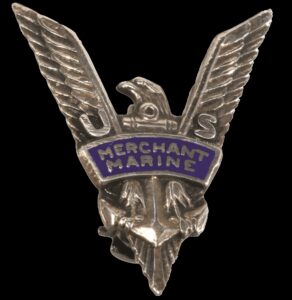
“V for Victory”
sterling silver pin, 1940s, $30-35
Some amazing wearable expressions of national pride were produced during the 1940s, but there’s a lot to love about all the patriotic adornment crafted since then. Let’s start with sweetheart jewelry because no overview of patriotic jewelry would be complete without it. Then, look at some other more recent times when a show of national celebration or support called for adornment.
Sweetheart Jewelry
It’s been quite a few years since I wrote about sweetheart jewelry, so I’ll begin with a refresher. In essence, this type of jewelry is a subset of patriotic jewelry since most of it was made and worn during World War II to show support for United States servicemen. The sweetheart in the name refers to these items donned by women waiting for their boyfriends and husbands to return from military service. They could also be worn by mothers to show support for their enlisted children.
The motifs in sweetheart jewelry vary widely, but most of these pieces have some form of reference to a branch of the military in the design. It might be as simple as a wire pin twisted to read “Sweetheart” with a metal star for an embellishment or a more elaborate eagle perched atop a pair of anchors. Pins were quite popular, but bracelets and necklaces were made by major manufacturers like Boucher, Coro, Trifari, and Accessocraft, among others. Some pieces, however, were handcrafted by soldiers and sent home to their loved ones. Many jewelry collectors fancy all of these items, but fans of militaria also add them to collections of sweetheart items that range from pillow covers and hankies to powder compacts.
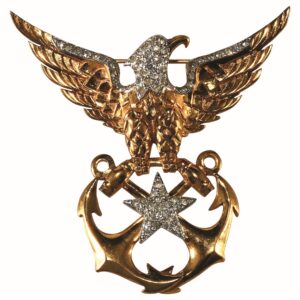
Eagle sweetheart brooch
made by Boucher, 1940s, $250-300
To learn more about this type of sentimental adornment, check out Sweetheart Jewelry and Collectibles by Nick Snider (Schiffer Books). Although this title has been around for a while now, it is still a good reference for examining the vast array of jewelry in this category.
Bicentennial Jewelry
The American Bicentennial in 1976 offered another period in American history when an uptick in patriotic jewelry production was in order. This time, however, it was more about representing Colonial America and the red, white, and blue. Instead of being worn as a sentimental expression like sweetheart jewelry, Bicentennial jewelry was sported to celebrate 200 years of American freedom.
A new wave of manufacturers put their spin on patriotic jewelry rife with representations of eagles, the Founding Fathers, the Declaration of Independence, and the Liberty Bell. Avon sold pendants, Napier produced charm bracelets, and even Miriam Haskell marketed beaded jewelry with patriotic color schemes. Many of these items were made to remind Americans of the Spirit of ’76, so they’re found fairly frequently at estate sales and thrift shops, which may change as time passes. Still, as of now, bicentennial designs are not as expensive as some other patriotic pieces. That’s good news for buyers on a budget who would like to add a piece with a story to a growing collection.
Patriotic Jewelry in the Modern Era
As historically significant events go, there are none in modern American history more poignant than the events of September 11, 2001. When horrific acts of terrorism occurred that day and stunned the country, citizens were immediately driven to wear flag pins in a show of solidarity. They also paid tribute to the victims and first responders who lost their lives that day with those patriotic gestures. It didn’t matter how old the flag was, which company made it, or whether it was enameled or sprinkled with rhinestones; the vintage marketplace was quickly scoured for these pins.
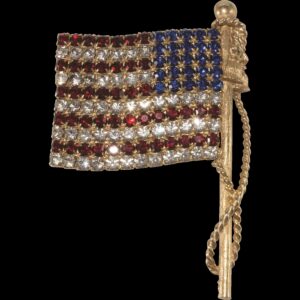
Thelma Deutsch flag pin,
c. 1985, $65-85
More than two decades later, vintage flag pins are still sure sellers for costume jewelry marketers. However, a particular jewelry business has long specialized in supplying icons of national pride to VIPs and ordinary Americans alike: Ann Hand. Since the late 1980s, Hand has been creating jewelry depicting flags, eagles, and American landmarks worn by everyone from First Ladies to senators. Former Secretary of State Madeleine Albright added several of Hand’s designs to her famed “Read My Pins” collection.
Heidi Daus has also sold other more recent patriotic styles through HSN, and those usually feature rhinestones in shapes like Uncle Sam hats and eagles in eye-catching sizes. On QVC, the Kirk’s Folly brand of fanciful jewelry also sold flag brooches in several styles and guardian angels holding small flags or the initials U.S. Another whimsical brand, Lunch at the Ritz, also sold designs with lots of enameled dangling elements reflecting the stars and stripes and fireworks associated with the Fourth of July.
Of course, many other jewelry brands have produced collectible pieces with a patriotic twist, from Thelma Deutsch in the 1980s and ‘90s to Joseff of Hollywood (still making them), incorporating their stockpile of old components from the 1930s and 1940s. That’s one of the best aspects of exploring a topic like this one since there are many different ways to express patriotism, whether you prefer something sentimental, traditional, elegant, or a piece with a touch of whimsy.
PAMELA WIGGINS SIEGEL has been buying, selling, and collecting costume jewelry for more than 30 years. She is the author of Warman’s Costume Jewelry (Krause Publications) and the co-founder of Costume Jewelry Collectors Int’l, an organization dedicated to hosting events and providing educational resources for collectors. Visit her online at www.chicantiques.com and www.cjci.co.
You May Also Like:
Military Collectors at Attention
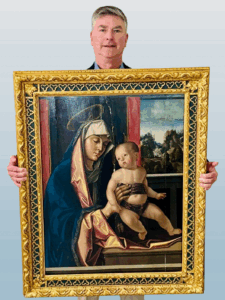
Antonio de Solario Madonna and Child
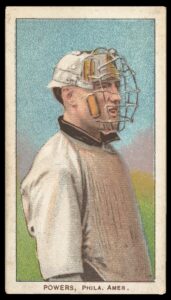
Image courtesy: Art Recovery International
When a woman in Norfolk, England, discovered that an antique painting she owned had been stolen from an Italian museum in the 1970s, she initially had no interest in returning it. Years of persuasion convinced her otherwise. On July 21, the painting, a Madonna and Child by lesser-known Italian Renaissance artist Antonio de Solario, returned to its home at the Civic Museum of Belluno in the Veneto region of Italy.
The museum had originally acquired the painting in 1872. Just over a hundred years later, in 1973, the museum was robbed, and Solario’s Madonna and Child was one of several paintings stolen. Soon after the heist, some of the paintings were located in Austria, which is where Norfolk resident Baron de Dozsa purchased the Madonna and Child to hang in his appropriately 16th-century home.
After Baron de Dozsa passed, the painting went to his former wife, Barbara de Dozsa. She attempted to sell it at a regional auction in 2017, which is when it came to the Museum of Belluno’s attention. According to The Guardian, the British police returned the painting to de Dozsa in 2020; Italian authorities could not supply the required documents to get it back, which was complicated by the COVID-19 pandemic.
Specialist art lawyer Christopher Marinello, founder of Art Recovery International and known as “the Sherlock Holmes of art crime,” contacted de Dozsa to persuade her to return the painting. At first, she refused. Under the United Kingdom’s Limitation Act of 1980, a buyer of stolen goods can be recognized as the legal owner after six years if the purchase was not related to the theft. Her former husband had bought the painting in good faith, not knowing it was stolen.
Marinello, however, called her argument “nonsense.” He believed that returning the painting was “the right thing.” He took the case pro bono; for him, it was personal, since his family comes from Belluno.
As Marinello pointed out, de Dozsa was unlikely to get any monetary value out of the painting. It is listed on stolen art databases from Interpol and the Italian national police force, Carabinieri, so if she tried to sell it, transport it to Europe, or even exhibit it, authorities would seize it. The painting’s true value, he argues, is its place in Belluno’s cultural heritage.
Ultimately, after plenty of press coverage and some persuasion from Marinello—who, in his own words, “can be annoyingly persistent”—de Dozsa agreed to return the painting. It was returned to the Civic Museum of Belluno in a small ceremony on July 21. Oscar de Pellegrin, mayor of Belluno, stated, “Returning this painting to the city means giving back a fragment of its identity, history and soul.”
In a statement from Art Recovery International, Marinello declared that “ultimately, it was Barbara de Dozsa’s decision to make, and she chose wisely. Her kindness has restored my faith in people who unknowingly come into possession of stolen or looted works of art.”
The Metropolitan Museum of Art displays an iconic sports card collection.

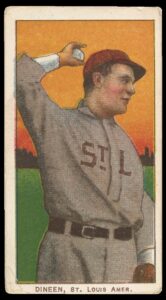
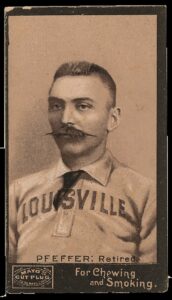
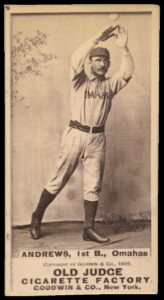
The Met is taking visitors out to the ball game in the current exhibition, Baseball Cards from the Collection of Jefferson R. Burdick. On view until July 22, the exhibit is a new rotation of baseball cards from the museum’s Jefferson R. Burdick collection.

The exhibit displays cards from the late nineteenth century to the modern era and features the top baseball players of their day. These cards were slipped into the packaging for gum and tobacco products as advertising material that ultimately became collectibles. A look at these cards not only shows a player’s name and field position but also displays diverse, and at times colorful, designs that were created by commercial lithographs.

Along with approximately 303,000 advertising inserts, postcards, and photographs, the collection—consisting of over 30,000 cards—was donated by Syracuse, New York, electrician Jefferson R. Burdick (1900–1963).

Burdick is a well-known name in sports card collecting because of this collection. When the card collector donated his impressive collection to the Met, then-curator of prints and photographs A. Hyatt Mayor (1901–1980) tasked Burdick to reorganize it to museum standards. What resulted was a cataloging system presented as the American Card Catalog (1939) that took Burdick fifteen years to refine, but it has proved so successful that card collectors still use it today. More information about the exhibition and the Jefferson R. Burdick card collection can be found at metmuseum.org.
Pictures are baseball cards from the Jefferson R. Burdick collection. (Courtesy of The Metropolitan Museum of Art)
You May Also Like:
Collector’s Gallery: Tobacco Card

Magic: The Gathering Beta “Time Vault” card, PSA grade 6, $1,651
Collectible cards have been around since the advertising trade cards of the 1800s, and card games long before then. Combining the two is a more recent idea. Magic: The Gathering, created by Richard Garfield in 1993 as Wizards of the Coast, was the first trading card game. Quinn’s Auction Galleries of Falls Church, VA, offered the Michael A. Quigley collection of Wizards of the West Coat Magic: The Gathering, which spans the game’s history, in a live gallery auction on May 15.

Magic: The Gathering “The Tabernacle at Pendrell Vale” card, PSA grade 8.0, $2,667
Magic: The Gathering has about 50 million players and generates more than $1 billion in revenue annually, thanks to its fans viewing the cards as collectibles. With that in mind, Matthew Quinn, Senior Vice President of Quinn’s, expected intense bidding and high sale prices. In a press release before the auction began, he noted that “there are already eleven bids on a group of 89 Magic: The Gathering Limited Edition Beta Swamp (B) Basic Land cards.” The lot sold for $1,016.

Magic: The Gathering Limited Edition Alpha set in sealed case, $45,720
The auction’s headliner was an extremely rare Limited Edition Alpha set. Released in 1993 and containing 295 cards, the Alpha set was the game’s original starter deck. This set is factory sealed in its magnetic case that resembles a book, adding to its value. It sold for $45,720; an impressive price, despite just missing its presale estimate of $50,000.

Magic: The Gathering Beta “Volcanic Island” card, PSA grade 4, $5,715
Players of Magic: The Gathering take on the roles of dueling wizards, and the cards in their decks represent the spells they use against their opponents or the resources they use to cast their spells. Some individual cards were expected to sell for hundreds, even thousands of dollars, and many exceeded those expectations. A Beta “Volcanic Island” surpassed its high estimate of $4,500 to sell for $5,715. The cards didn’t have to be in perfect condition to achieve high prices; this one had a PSA grade of 4. A Beta “Time Vault” card PSA graded 6 sold for $1,651. Beta cards, released in 1993, came from the second print run of the Limited Edition starter deck.

Magic: The Gathering “Moat/Fossato” card, Legends Expansion set, Italy, Beckett grade 9.5, $825
Some cards up for sale were in mint or near-mint condition. “The Tabernacle at Pendrell Vale” card PSA graded 8.0, Near Mint, sold within its $2,000 to $4,000 presale estimate at $2,667. This card was from the Legends Expansion Set, released in 1994. A “Moat/Fossato” card from the Italian version of the Legends Expansion Set had a Beckett grade of 9.5. Expected to sell for $400 to $600, it achieved a final price of $825.

Group of about 800 Magic: The Gathering cards, Arabian Knights Expansion Set, $4,127
Groups of cards also sold well. A collection of about 800 cards from the Arabian Knights Expansion Set sold for $4,127, more than doubling its high estimate of $1,200. A group of about 1000 Limited Edition Beta cards with a high estimate of $2,000 sold for $5,080. These groups included many multiples of the same card, an appealing prospect for collectors who enjoy trading their cards as well as playing the game.

Group of 1000 Magic: The Gathering Limited Edition Beta cards, $5,080
Photos courtesy of Quinn’s Auction Galleries.
You May Also Like:
Identification Guide: Paper Ephemera
Nearly 30 years, countless stories, one unforgettable editor.

Paul Kennedy, now retired, formerly Editorial Director of Kovels Antique Trader.
After nearly three decades in the publishing world, Paul Kennedy is hanging up his editor’s hat—and what a legacy he leaves behind. From his early days at Krause Publications in 1997 to guiding Kovels Antique Trader through industry changes with F+W Media and now Active Interest Media, Paul has been a steady, inspiring presence through it all.
He’s taken on many roles, including book acquisitions expert, sharp-witted writer, and, for the past five years, the editor-in-chief who brought energy, creativity, and a clear editorial voice to every page of this magazine. Paul is one of those rare individuals who’s probably forgotten more about antiques and collectibles than most of us will ever know—and he’s shared that knowledge generously, with humor, patience, and unmistakable passion.
In the “From the Editor” feature in this month’s edition, I attempted to share what working with Paul Kennedy meant to me. Now, it’s my coworkers’ turn. What follows is just a small sampling of the admiration, memories, and gratitude from those lucky enough to work alongside him. Because when someone is larger-than-life, encouraging, and a genuinely kind person, saying goodbye isn’t easy—but celebrating them sure is.
— Kele Johnson, Editor, Kovels Antique Trader.
“Paul not only ran Antique Trader, but he also oversaw Sports Collectors Digest, which gave us a lot of opportunities to debate and discuss his other favorite pastimes—baseball and basketball. Whether it was arguing about the Brewers, Bucks or his beloved Wisconsin Badgers, we had many wildly entertaining sports talks. Paul often made my day with his colorful personality and friendly banter. Like a true Wisconsin fan, he could ‘Badger’ you with the best of ’em.” Jeff Owens, Editor, Sports Collectors Digest
“Paul’s work bringing Kovels into Antique Trader was nothing less than fantastic—and that included bringing me on board. It took me a while to get used to a different type of publication, with a faster pace and new responsibilities, but Paul gave me plenty of patience, guidance and ideas. His writing is always filled with wit and insight, and he made it look easy!” Elizabeth Heineman, Copy Editor, Kovels Antique Trader
“Paul has been a great leader and mentor. He brightened every room he walked into. It has been a privilege to get to know him over the years.” Sophia Mattimiro, Senior Editor, Numismatic News
“Paul gave me my first oportunity at Kovels by accepting my story pitch as a freelance writer. Since then, I’ve grown with the magazine and other titles at AIM, all thanks to Paul. I wish him a wonderful retirement and a huge congratulations on the amazing work he’s accomplished in his career!” Sierra Holt, Managing Editor, Kovels Antique Trader
“I first met PK when I was a cub newspaper reporter starting a new job in a new town way back in 1988. I was at my crummy little desk when this cat with long 1980s hair, a chees mustache, skinny black tie (like he was going dancing at Club MTV or something) and black Chuck Taylor Converse All-Stars comes sauntering up to my desk. He was wise-cracking and acting all hip and funny. I found out he was the hotshot local reporter and columnist … We hit it off right away. And I quickly realized, this guy was good! Really good.
We only worked together for a year before I left for another gig. About 12 years later I took another job at Krause Publications in Wisconsin, and who comes rolling up to my new desk again? Good old PK! So we worked together for another 25 years after that.
I could go on all day about him. Anybody who knows him knows Paul is 1 in a million. He’s “on” 24/7/365. The life of the party everywhere he goes, and a great person. One of the best writers I know, and one of the best friends and co-workers I’ve ever had.” Brian Earnest, Editorial Director, Old Cars Weekly
“When I began working with Paul, he quickly became one of my favorite people to work with. I enjoyed not only collaborating with him on every issue to help create how he wanted each issue to look, his sense of humor made it that much more fun. His passion for the Kovel’s Antique Trader and the subject matter was obvious and his enthusiasm was contagious. At the end of every issue, he would end his email with ‘Let’s make a magazine!’ I will truly miss working with him.” Julie Green, Graphic Designer, Kovels Antique Trader
You May Also Like: